Monday, November 9, 2015

5 ways to avoid major injuries during indoor cycling classes

Posted on November 8, 2015 by Stone Hearth News


 Stories of amateur cyclists injuring themselves during an indoor spin class are as common as people scrambling for WiFi access to book their next session online. And while you may have heard of your fair share of people fainting mid-class and falling off their bikes, or worse, developing rhabdomyolysis, other injuries are a lot more insidious.

Carla Paredes, a cycling instructor at the newly opened Saddle Row, gives us a few pointers to keep in mind for the next time we put the pedal to the metal:
#1 Don’t be afraid to ask about the beginner’s classes Why: “It’s hard to get on the bike and come from zero [physical activity], especially since you can’t control how the intense environment is going to make your body react. You might overdo it or get dizzy,” Carla says.

How to fix it:
Saddle Row also offers special beginner classes, which are spent mostly sitting on the saddle (most cycling classes require students to be stand up while on the bike) and doing plenty of arm movements.

If you’re ready to move to the next level, try the Underground classes, which are a “dance type of cycling workout.”

Exchange classes are for cyclists and triathletes, and focus on maintaining a particular amount of revolutions per minute (RPM). A combination of both can be had during Resistance classes, which incorporate cycling drills, dance coordination movements, plus resistance bands for upper body strengthening and core workouts.

– See more at: http://preen.inquirer.net/17469/5-ways-to-avoid-major-injuries-during-an-indoor-cycling-class#sthash.ak45jmXy.dpuf

 Get our free newsletters on these topics::

Commercial Fitness Industry, Fitness:
Cycling, Sports Medicine:
 Injuries - See more at:

http://www.stonehearthnewsletters.com/5-ways-to-avoid-major-injuries-during-indoor-cycling-classes/sports-medicine-injuries/#sthash.nKqtzqTP.c7xq692S.dpuf

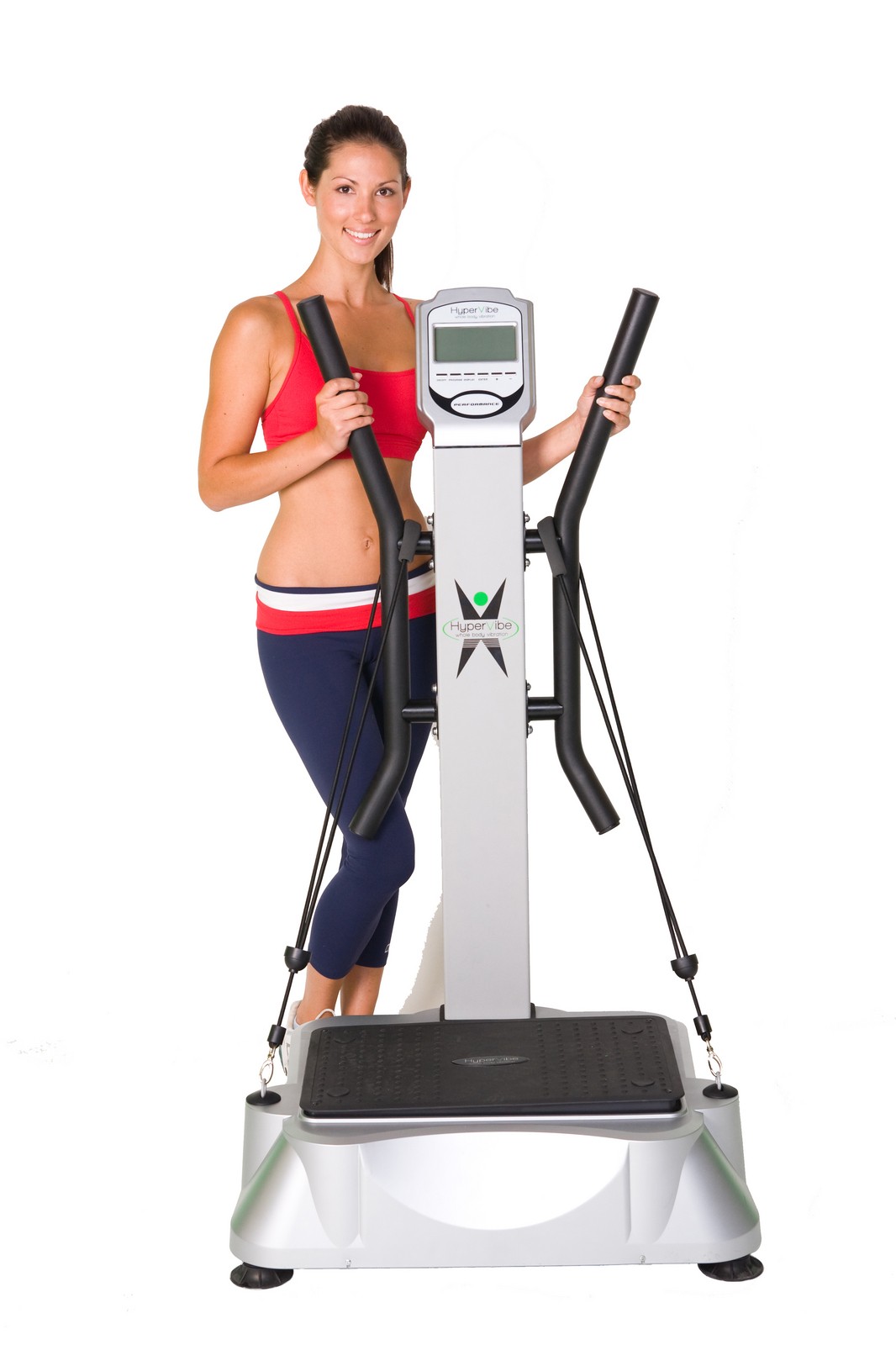
Whole-body vibration training update


 Nutr Hosp. 2015 Nov 1;32(n05):1949-1959.

[EFFECTS OF WHOLE-BODY VIBRATION TRAINING ON BODY COMPOSITION AND PHYSICAL FITNESS IN RECREATIONALLY ACTIVE YOUNG ADULTS].

 [Article in Spanish]

Martínez-Pardo E1, Martínez-Ruiz E2, Alcaraz PE3, Rubio-Arias JA3.
Author information
1Departamento de Ciencias de la Actividad Física y del Deporte, Facultad de Deporte – UCAM, Universidad Católica de Murcia, Murcia.. jararias@ucam.edu.
2Cátedra de traumatología del deporte – UCAM, Universidad Católica de Murcia, Murcia.. jararias@ucam.edu.
3Departamento de Ciencias de la Actividad Física y del Deporte, Facultad de Deporte – UCAM, Universidad Católica de Murcia, Murcia. UCAM Centro de Investigación de Alto Rendimiento – UCAM, Universidad Católica de Murcia (Murcia), España.. jararias@ucam.edu.

Abstract in English, Spanish

In the last decade, it has been suggested that whole- body vibration training (WBV) may increase neuromuscular performance and consequently affect the muscular improvement as either acute response to vibration or chronic adaptation training. Vibrating platforms generate frequencies from 5-45 Hz and vertical oscillations of 1-11 mm peak to peak, affecting more or less intensity acceleration changing by combining frequency and amplitude. Vibration training, in a session as various offers different results in regard to changes in body composition and in increasing the vertical jump, sprint, and the different manifestations of force development. These promising results await further research to establish parameters (duration, frequency and amplitude) with vibration stimulation in young active subjects. This literature review provides an update on the scientific evidence on the body vibrations in order to answer the question whether WBV, meaning the exercise by increasing the gravitational load collection, is a treatment option if the aim is to improve neuromuscular function, flexibility, balance, agility, coordination and body composition.
Source

  
- See more at: http://www.stonehearthnewsletters.com/whole-body-vibration-training-update/sports-medicine/#sthash.RfvowGdw.ThtH0ijn.dpuf

Just 1 energy drink may boost heart disease risk in young adults


Drinking one 16-ounce energy drink boosts blood pressure and stress hormone responses in young, healthy adults, according to a study presented at the American Heart Association’s Scientific Sessions 2015. These changes could conceivably trigger new cardiovascular events.

Researchers studied 25 healthy young adults with no known cardiovascular risk factors. Each drank one 16-ounce can of a commercially available energy drink or a sham drink in random order on two separate days. Researchers measured participants’ blood pressure and blood levels of norepinephrine before and 30 minutes after drink consumption. Norepinephrine is a “fight or flight” chemical that increases blood pressure and the heart’s ability to contract and it modulates heart rate and breathing in response to perceived stress.

Researchers found that in addition to increases in blood pressure after consuming the energy drink, participants’ norepinephrine levels increased more than twice as much when compared to those who drank the sham drink. Specifically, norepinephrine levels increased by almost 74 percent after the energy drink consumption, versus by 30 percent after the sham drink.

Researchers said their findings suggest increases in blood pressure and stress hormones could predispose otherwise healthy, young adults to increased cardiovascular risk.
Source

- See more at: http://www.stonehearthnewsletters.com/just-1-energy-drink-may-boost-heart-disease-risk-in-young-adults/heart-disease/#sthash.lP8PlfCk.dJdWIdsq.dpuf

Wednesday, November 4, 2015

Why is osteoarthritis more common among athletes?

Posted on by Stone Hearth News    


Osteoarthritis and reduced range of motion in the hip and groin are more common among athletes and other people who engage in strenuous physical activity. The cause may be microscopic injuries due to high load on the hips and subsequent joint changes. A PhD thesis at Sahlgrenska Academy studied elite soccer and hockey players.

Research has conclusively shown that back problems are common among athletes and that high loads during childhood and adolescence can lead to growth disorders and spinal injuries. These individuals are also particularly prone to hip and groin problems.

More frequent in athletes

Hip changes that progress to osteoporosis are more frequent in athletes and others who engage in strenuous physical activity.

“We compared 17 elite male soccer players and 15 elite male hockey players with 30 men who did not engage in strenuous physical activity in order to identify frequency of hip problems and
radiological changes,” says Páll Jónasson, a researcher at Sahlgrenska Academy “The changes were just as common in both groups, but the athletes were more susceptible to reduced range of motion.”

Biomechanical studies

Two biomechanical studies placed high loads on porcine hips under controlled circumstances. The growth zone in the hip turned out to be the weak link.

“Microscopic injuries or fractures developed in and around the growth zone after repeated loading,” Mr. Jónasson says. “These kinds of injuries presumably give rise to growth disorders that lead to joint changes and ultimately to osteoarthritis.”


New instruments


Although young and middle-aged adults who engage in strenuous physical activity are increasingly afflicted, previous measurement tools had been designed to diagnose indications for hip arthroscopy among the elderly only.


“We have devised two instruments for younger people,” Mr. Jónasson says. “A questionnaire adapted to them is now available for use in both clinical practice and future research.”
http://sahlgrenska.gu.se/english/research/news-article//why-is-osteoarthritis-more-common-among-athletes-.cid1331557
Source


- See more at: http://www.stonehearthnewsletters.com/why-is-osteoarthritis-more-common-among-athletes/osteoarthritis/#sthash.66tc1Fx1.yjaGGQ86.dpuf

Brisk walks better at keeping weight off than going to the gym: new UK study

 
Brisk walking is better for keeping weight off than going to the gym, a study has found.
Women of all ages and men over 50 who regularly walked for more than 30 minutes were found to weigh less than those who took part in vigorous activities like jogging or cycling.
 
Research by the London School of Economics discovered people who walked a lot had lower BMIs and smaller waists than those who took part in regular sport.
 
Dr Grace Lordan, a specialist in health economics who led the research, compared the measurements of people who took part in activities which increased heart rate and caused perspiring.
 
She compared people who said they regularly did half-an-hour of fast-paced walking to those who did the same amount of heavy housework, manual labour and sports like rugby.
 
Waistline and BMI measurements showed that men and women who regularly walked briskly for more than 30 minutes had lower BMIs and smaller waists than those who engaged in regular exercise.
 
The findings were based on physical activity levels from the annual Health Survey for England between 1999 and 2012.
 
- See more at: http://www.stonehearthnewsletters.com/brisk-walks-better-at-keeping-weight-off-than-going-to-the-gym-new-uk-study/benefits-exercise/#sthash.ztCWTgfw.jpDBYZrA.dpuf

Tuesday, October 27, 2015

Late-Life Exercise and Difficulty with Activities of Daily Living: The Magic Metric is 30 Minutes


Ann Behav Med. 2015 Oct 22. [Epub ahead of print]

Late-Life Exercise and Difficulty with Activities of Daily Living: an 8-Year Nationwide Follow-up Study in Taiwan.

Ku PW1,2, Fox KR3, Gardiner PA4, Chen LJ5,6.

Author information

1Graduate Institute of Sports and Health, National Changhua University of Education, Changhua City, Taiwan. powen.ku@gmail.com.
2Institute of Epidemiology and Health Care, University College London, London, UK. powen.ku@gmail.com.
3Centre for Exercise, Nutrition and Health Sciences, University of Bristol, Bristol, UK. k.r.fox@bris.ac.uk.
4School of Public Health, Faculty of Medicine and Biomedical Sciences, University of Queensland, Brisbane, Australia. p.gardiner@uq.edu.au.
5Institute of Epidemiology and Health Care, University College London, London, UK. ljchen@ntupes.edu.tw.
6Department of Exercise Health Science, National Taiwan University of Sport, Taichung, Taiwan. ljchen@ntupes.edu.tw.

Abstract

BACKGROUND:

Many studies have shown that low levels of exercise in later life are associated with the progression of difficulties with activities of daily living. However, few have assessed the independent effect of exercise components on difficulty in performing activities of daily living and explored whether the relationship between exercise and activities of daily living is reciprocal.

PURPOSES:

This study aimed to examine, in a nationally representative sample of older Taiwanese, the independent effect of the frequency, duration, and intensity of exercise on difficulty with activities of daily living. A secondary objective was to explore the degree to which the relationship of late-life exercise with activities of daily living is bi-directional.

METHODS:

Data from a fixed cohort (n = 1268, aged 70+) in 1999 with 8 years of follow-up were analyzed. Generalized estimating equation models with multivariate adjustment were performed.

RESULTS:

Participants engaging in higher levels of exercise had less difficulty with subsequent activities of daily living. Among the components of exercise, only duration, especially 30 min or more per session, was associated with fewer difficulties with activities of daily living. The relationship between exercise and activities of daily living was reciprocal, although the influence of activities of daily living on subsequent exercise levels was weaker.

CONCLUSIONS:

Exercise in later life may be able to minimize the difficulties in activities of daily living and help maintain the mobility and independence of older adults.
Source
 2 Share0  1  0 Share0 Share0  2  3 Share0 Share0  9
- See more at: http://www.stonehearthnewsletters.com/late-life-exercise-and-difficulty-with-activities-of-daily-living-the-magic-metric-is-30-minutes/elder-care/#sthash.FHYw7akP.TgPlnes4.dpuf

New top 10 fitness trends for 2016 from the ACSM


Newswise — INDIANAPOLIS – Are you tracking your running mileage, calories burned or average heart rate using a wearable device? The American College of Sports Medicine (ACSM) has announced its annual fitness trend forecast and for the first time, exercise pros say wearable technology will be the top trend in fitness next year. The results were released in the article “Worldwide Survey of Fitness Trends for 2016: 10th Anniversary Edition” published today in the November/December issue of ACSM’s Health & Fitness Journal®.

“Wearable technology has overtaken activities like body weight training and high-intensity interval training to claim the number one spot in this year’s survey,” said Walter R. Thompson, Ph.D., FACSM, the lead author of the survey and associate dean in the College of Education & Human Development at Georgia State University in Atlanta. “Consumer interest in fitness technology may signal that the low-cost, DIY exercise trend is waning.”

Now in its tenth year, the survey was completed by more than 2,800 health and fitness professionals worldwide, many certified by ACSM, and was designed to reveal trends in various fitness environments. Forty potential trends were given as choices, and the top 20 were ranked and published by ACSM, including a few new additions to last year’s list, one of which rose immediately to the number one spot.

“Tech devices are now central to our daily lives and have changed the way we plan and manage our workouts,” said Thompson. “Wearable devices also provide immediate feedback that can make the wearer more aware of their level of activity and can motivate the user to achieve their fitness goals.”

The top 10 fitness trends for 2016 are:

1. Wearable Technology: includes fitness trackers, smart watches, heart rate monitors, and GPS tracking devices.

2. Body Weight Training: Body weight training uses minimal equipment making it more affordable. Not limited to just push-ups and pull-ups, this trend allows people to get “back to the basics” with fitness.

2. High-Intensity Interval Training (HIIT): HIIT involves short bursts of activity followed by a short period of rest or recovery. These exercise programs are usually performed in less than 30 minutes.

4. Strength Training. Strength training remains a central emphasis for many health clubs.
Incorporating strength training is an essential part of a complete exercise program for all physical activity levels and genders. (The other essential components are aerobic exercise and flexibility.)

5. Educated and Experienced Fitness Professionals. Given the large number of organizations offering health and fitness certifications, it’s important that consumers choose professionals certified through programs that are accredited by the National Commission for Certifying Agencies (NCCA), such as those offered by ACSM. ACSM is one of the largest and most prestigious fitness-certification organizations in the world.

6. Personal Training. More and more students are majoring in kinesiology, which indicates that they are preparing themselves for careers in allied health fields such as personal training. Education, training and proper credentialing for personal trainers have become increasingly important to the health and fitness facilities that employ them.

7. Functional Fitness. This is a trend toward using strength training to improve balance and ease of daily living. Functional fitness and special fitness programs for older adults are closely related.

8. Fitness Programs for Older Adults. As the baby boom generation ages into retirement, some of these people have more discretionary money than their younger counterparts. Therefore, many health and fitness professionals are taking the time to create age-appropriate fitness programs to keep older adults healthy and active.

9. Exercise and Weight Loss. In addition to nutrition, exercise is a key component of a proper weight loss program. Health and fitness professionals who provide weight loss programs are increasingly incorporating regular exercise and caloric restriction for better weight control in their clients.

10. Yoga. Based on ancient tradition, yoga utilizes a series of specific bodily postures practiced for health and relaxation. This includes Power Yoga, Yogalates, Bikram, Ashtanga, Vinyasa, Kripalu, Anurara, Kundalini, Sivananda and others.

The full list of top 20 trends is available in the article “Worldwide Survey of Fitness Trends for 2016: 10th Anniversary Edition.” An infographic of the trends study results is available here.
The American College of Sports Medicine is the largest sports medicine and exercise science organization in the world. More than 50,000 international, national and regional members and certified professionals are dedicated to advancing and integrating scientific research to provide educational and practical applications of exercise science and sports medicine.

ACSM’s Health & Fitness Journal® is an official publication of the American College of Sports Medicine, visit www.acsm-healthfitness.org for more information. This journal is available from Wolters Kluwer Health/Lippincott Williams & Wilkins at 1-800-638-3030.
- See more at: http://www.stonehearthnewsletters.com/new-top-10-fitness-trends-for-2016-from-the-acsm/sports-medicine/#sthash.asXfcqvw.n8RRw2I6.dpuf