Thursday, June 20, 2013

UpDate: Nothing left to do but fight: Malignaggi vs Broner


Today was the final presser for the Malignaggi Vs Broner fight, which will happen this Saturday June 22 at Barclays center in Brooklyn, New York.

For those who were on unable to make it this weeks media events or just haven't caught it yet on youtube, here you go.


There is still time to be part of Brooklyn Boxing History.
Contact Joe Dimitri
718-942-9669
for your tickets now.

Wednesday, June 19, 2013

How bone adapts to exercise may be affected by timing of calcium and vitamin D supplementation


Posted on June 18, 2013 by Stone Hearth News

Taking calcium and vitamin D before exercise may influence how bones adapt to exercise, according to a new study. The results will be presented on Tuesday at The Endocrine Society’s 95th Annual Meeting in San Francisco.
“The timing of calcium supplementation, and not just the amount of supplementation, may be an important factor in how the skeleton adapts to exercise training,” said study lead author Vanessa D. Sherk, PhD, postdoctoral research fellow at the University of Colorado Anschutz Medical Campus. “Further research, however, is needed to determine whether the timing of calcium supplementation affects the skeletal adaptations to exercise training.”
Previous research has shown that a year of intense training is associated with substantial decreases in bone mineral density among competitive road cyclists. Experts believe that this kind of exercise-induced bone loss could be related to the loss of calcium during exercise.
As blood calcium levels drop, the parathyroid gland produces excess parathyroid hormone, which can mobilize calcium from the skeleton.
 In this study, investigators found that an exercise-induced decrease in blood calcium occurred whether calcium supplements were taken before or after exercising. Pre-exercise supplementation, however, resulted in less of a decrease. Although not statistically significant, parathyroid hormone levels increased slightly less among cyclists who took calcium before exercising.

 “These findings are relevant to individuals who engage in vigorous exercise and may lose a substantial amount of calcium through sweating,” Sherk said. “Taking calcium before exercise may help keep blood levels more stable during exercise, compared to taking the supplement afterwards, but we do not yet know the long-term effects of this on bone density.”

  The timing of calcium supplementation did not cause a difference in blood levels of a compound that is a biological indicator of bone loss. Both the before- and after-exercise groups exhibited 50-percent increases in the level of this compound, called CTX, for collagen type-1 C-telopeptide.

 Study participants included 52 men aged 18 to 45 years. Investigators randomly assigned participants to take 1,000 milligrams of calcium and 1,000 international units of vitamin D either 30 minutes before or one hour after exercise. The exercise comprised a simulated 35-kilometer time trial, and participants wore skin patches to absorb sweat. Investigators measured blood levels of calcium and parathyroid hormone before and immediately after exercise. They also measured CTX before and 30 minutes after exercise. They used pre- and post-body weight, adjusted for fluid intake, combined with the calcium measured in the sweat from the skin patches, to estimate the amount of calcium lost through the skin during exercise.

 Source - See more at: http://www.stonehearthnewsletters.com/how-bone-adapts-to-exercisemay-be-affected-by-timing-of-calcium-and-vitamin-d-supplementation/nutrition-supplements/#sthash.SPXlrcyL.dpuf

Tuesday, June 18, 2013

Tai chi, the ‘perfect exercise,’ is going more mainstream


   Posted on June 17, 2013 by Stone Hearth News

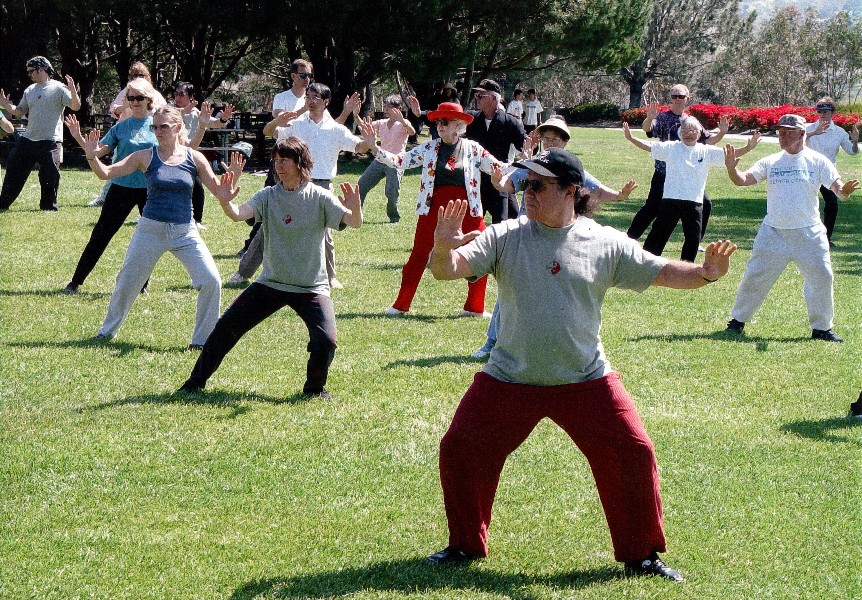
                                 (Reuters) – For modern, harried lifestyles focused on getting and spending, fitness experts say tai chi, the ancient Chinese slow-moving exercise, can be an ideal way for anyone to stay fit.
 A staple in senior citizen centers and a common dawn sighting in public parks, the practice can offer long-term benefits for all age groups.
 “In this high-tech world that’s all about speed, greed and instant gratification, tai chi is the antidote to bring us back to balanced health,” according to Arthur Rosenfeld, a tai chi master and the author of a new book called Tai Chi–The Perfect Exercise: Finding Health, Happiness, Balance, and Strength.

“It doesn’t mean you can win the marathon or clean and jerk 750 pounds or win a cycle sprint,” said the South Florida resident, 56. “It’s not about getting there sooner.” Tai chi is more about how the body works than how it looks, and is about aging gracefully and “with less drama.”

 “The last time I looked, there were some 500 studies about the various physical benefits of tai chi, from improving balance and attention span to boosting the immune system to beating back the symptoms of arthritis, asthma and insomnia,” said Rosenfeld.


- See more at: http://www.stonehearthnewsletters.com/tai-chi-the-perect-exercise-is-going-more-mainstream/fitness-tai-chi/#sthash.YaWEFLB3.dpuf

Juven, the dietary supplement, linked to increased muscle mass in the elderly


 Posted on June 17, 2013 by Stone Hearth News

                                 SAN FRANCISCO– A supplemental beverage used to treat muscle-wasting may help boost muscle mass among the elderly, according to a new study. The results were presented today at The Endocrine Society’s 95th Annual Meeting in San Francisco.
 The supplemental beverage, called Juven®, contains three amino acids, including arginine. Amino acids are the building blocks of proteins, and are required for cell growth and repair. The amino acid arginine is especially important because it increases growth-hormone production, which causes the body to produce a critical protein called insulin-like growth factor 1, or IGF-1. This protein promotes growth and development and, as its name suggests, is similar in structure to the hormone insulin.

Previously, studies showed that Juven® helped increase muscle mass in patients with AIDS or cancer. These earlier findings led this study’s investigators to hypothesize that the increased muscle mass could result from greater blood concentrations of IGF-1. They theorized that these increased protein levels could have the same benefits among the elderly, who also experience decreased muscle mass and strength related to drops in hormone production that occur with aging. In turn, increased muscle strength could potentially improve quality of life among the elderly.

  They found that participants who received Juven® had significant increases in lean body mass, while those who received placebo did not have any change. In addition, blood concentrations of IGF-1 increased among Juven® recipients, but not among the placebo group. The correlation between the improved IGF-1 concentrations and increased lean tissue, however, was not statistically significant.

 “The amino acid cocktail of the dietary supplement Juven® appears to hold promise for increasing lean body in healthy older adults,” said study lead author Amy C. Ellis, PhD, assistant professor at the University of Alabama at Tuscaloosa. “However, more research is needed to determine the cause-and-effect relationship and the mechanisms by which the amino acids in Juven® may favorably affect body composition of healthy, older adults.”

Study participants were 29 healthy adults between the ages of 65 and 87 years. Each received either Juven® or a placebo drink twice a day, along with their regular daily diet, for six months. At the beginning of the study and again six months later, investigators used a special test to measure lean body mass. At both times, they also assessed participants’ blood levels of IGF-1 after fasting.

The National Institutes of Health and the Center for Aging at the University of Alabama-Birmingham funded the study. Abbott Laboratories, the manufacturer of Juven®, provided the dietary supplement and the placebo.

 Source - See more at: http://www.stonehearthnewsletters.com/juven-the-dietary-supplement-linked-to-increased-muscle-mass-in-the-elderly/elder-care/#sthash.FYjSN05L.dpuf

Purchase at:

http://www.amazon.com/Abbott-Nutrition-Juven-Packet-Institutional/dp/B005X9F7RE/ref=sr_1_4?ie=UTF8&qid=1371562553&sr=8-4&keywords=juven

http://www.walgreens.com/store/c/juven/ID=357344-brand

Obesity leads to brain inflammation, and low testosterone makes it worse


  Posted on June 17, 2013 by Stone Hearth News


                                  Low testosterone worsens the harmful effects of obesity in the nervous system, a new study in mice finds. The results will be presented Monday at The Endocrine Society’s 95th Annual Meeting in San Francisco.
 “Low testosterone and obesity are common in aging men, and each is associated with type 2 diabetes and Alzheimer’s disease,” said the study’s lead investigator, Anusha Jayaraman, PhD, of the University of Southern California in Los Angeles. “Our new findings demonstrate that obesity and low testosterone combine to not only increase the risk of diabetes but also damage the brain.”
 The study – which was conducted in the laboratory of Christian J. Pike, PhD, Professor in the Davis School of Gerontology at USC and funded by the National Institutes of Health’s National Institute on Aging – consisted of three groups of male mice that received a high-fat diet (60 percent of calories were from fat) to induce obesity. Each group had eight mice and varied by testosterone status. One group had normal testosterone levels, and the second group underwent surgical removal of the testes so that the mice had low testosterone levels. The third group also underwent castration but then received testosterone treatment through a capsule implanted beneath the skin.
 The high-fat diet, Jayaraman reported, resulted in obesity and evidence of diabetes – abnormally high blood glucose (sugar) levels and poor glucose tolerance, which is the ability to clear glucose from the bloodstream. Compared with the group that had normal testosterone levels, the testosterone-deficient mice had more body fat, higher blood sugar levels and poorer glucose tolerance, she said.

After blood testing, brain tissues from the mice underwent analysis for changes. The brains of obese mice showed substantial inflammation and were less able to support nerve cell growth and survival, according to Jayaraman. These damaging effects of diet-induced obesity were significantly worse in mice with low testosterone, she said, adding that control groups of mice fed a normal diet did not show these changes.

 “Our findings suggest that low testosterone and obesity interact to regulate inflammation of the nervous system, which may increase the risk of disorders such as type 2 diabetes and Alzheimer’s disease,” she said.

Because many of the negative outcomes of the high-fat diet were eased in the group of mice that received testosterone therapy, Jayaraman said that “testosterone treatment may be useful in reducing the harmful effects of obesity and low testosterone on the nervous system.”

 Source - See more at: http://www.stonehearthnewsletters.com/obesity-leads-to-brain-inflammation-and-low-testosterone-makes-it-worse/diabetes/#sthash.DPuayYiF.dpuf

Weight loss improves memory and alters brain activity in overweight women


 Posted on June 17, 2013 by Stone Hearth News

                                  SAN FRANCISCO– Memory improves in older, overweight women after they lose weight by dieting, and their brain activity actually changes in the regions of the brain that are important for memory tasks, a new study finds. The results were presented today at The Endocrine Society’s 95th Annual Meeting in San Francisco.
  “Our findings suggest that obesity-associated impairments in memory function are reversible, adding incentive for weight loss,” said lead author Andreas Pettersson, MD, a PhD student at Umea University, Umea, Sweden.
Previous research has shown that obese people have impaired episodic memory, the memory of events that happen throughout one’s life.
Pettersson and co-workers performed their study to determine whether weight loss would improve memory and whether improved memory correlated with changes in relevant brain activity. A special type of brain imaging called functional magnetic resonance imaging (functional MRI) allowed them to see brain activity while the subjects performed a memory test.
The researchers randomly assigned 20 overweight, postmenopausal women (average age, 61) to one of two healthy weight loss diets for six months. Nine women used the Paleolithic diet, also called the Caveman diet, which was composed of 30 percent protein; 30 percent carbohydrates, or “carbs”; and 40 percent unsaturated fats. The other 11 women followed the Nordic Nutrition Recommendations of a diet containing 15 percent protein, 55 percent carbs and 30 percent fats.
Before and after the diet, the investigators measured the women’s body mass index (BMI, a measure of weight and height) and body fat composition. They also tested the subjects’ episodic memory by instructing them to memorize unknown pairs of faces and names presented on a screen during functional MRI. The name for this process of creating new memory is “encoding.” Later, the women again saw the facial images along with three letters. Their memory retrieval task, during functional MRI, was to indicate the correct letter that corresponded to the first letter of the name linked to the face.
Because the two dietary groups did not differ in body measurements and functional MRI data, their data were combined and analyzed as one group. The group’s average BMI decreased from 32.1 before the diet to 29.2 (below the cutoff for obesity) after six months of dieting, and their average weight dropped from 188.9 pounds (85 kilograms) to 171.3 pounds (77.1 kilograms), the authors reported. This study was part of a larger, diet-focused study funded by the Swedish Research Council and the Swedish Heart-Lung Foundation.
Memory performance improved after weight loss, and Pettersson said the brain-activity pattern during memory testing reflected this improvement. After weight loss, brain activity reportedly increased during memory encoding in the brain regions that are important for identification and matching of faces. In addition, brain activity decreased after weight loss in the regions that are associated with retrieval of episodic memories, which Pettersson said indicates more efficient retrieval.
“The altered brain activity after weight loss suggests that the brain becomes more active while storing new memories and therefore needs fewer brain resources to recollect stored information,” he said.

 Source - See more at: http://www.stonehearthnewsletters.com/weight-loss-improves-memory-and-alters-brain-activity-in-overweight-women/cognitive-impairment/#sthash.IQ4b0Gf4.dpuf

Monday, June 17, 2013

Food Over Medicine: The Conversation That Could Save Your Life


Nearly half of Americans take at least one prescription medicine, with almost a quarter taking three or more, as diseases such as diabetes, obesity, and dementia grow more prevalent than ever. The problem with medicating common ailments, such as high blood pressure or elevated cholesterol, is that drugs treat symptoms—and may even improve test results—without addressing the cause: diet.
Overmedicated, overfed, and malnourished, most Americans fail to realize the answer to lower disease rates doesn’t lie in more pills but in the foods we eat.With so much misleading nutritional information regarded as common knowledge, from “everything in moderation” to “avoid carbs,” the average American is ill-equipped to recognize the deadly force of abundant, cheap, unhealthy food options that not only offer no nutritional benefits but actually bring on disease.
In Food Over Medicine, Pamela A. Popper, PhD, ND, and Glen Merzer invite the reader into a conversation about the dire state of American health—the result of poor nutrition choices stemming from food politics and medical misinformation. But, more important, they share the key to getting and staying healthy for life.
Backed by numerous scientific studies, Food Over Medicine details how dietary choices either build health or destroy it. Food Over Medicine reveals the power and practice of optimal nutrition in an accessible way.
Includes recipes from Chef Del Sroufe, author of the bestselling Forks Over Knives—The Cookbook and Better Than Vegan

Read the first few pages of Food Over Medicine: The Conversation That Could Save Your Life